+86 18791176186
  yunhuati@163.com


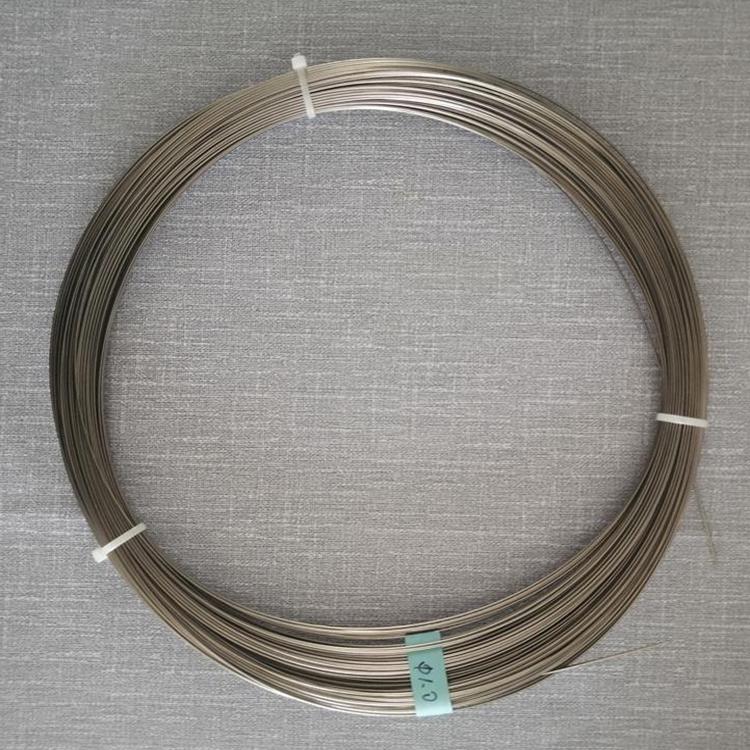
Nickel wire is a type of metal wire that has good mechanical strength, corrosion resistance, and high heat resistance. It is suitable for making vacuum devices, electronic instrument components, and chemical production of strong alkali filters.
Characteristics of nickel wire:
Nickel has mechanical properties similar to carbon steel, and its resistance to alkaline corrosion is second only to silver in metallic materials. Nickel wire forms a black protective film on the surface in concentrated alkali, making it highly corrosion-resistant. It is widely used as a material for electric light sources and coatings, with high surface quality and good processing performance. It is used for making work such as anodes, separators, electrode supports, etc. It can also be used as a guide wire in light bulbs. In addition, it plays a very important role in the chlor alkali industry. Electrical grade materials are alloys with various compositions due to different usage conditions. Moreover, electrode materials are required to have low electrical resistivity to prevent electrode overheating, high temperature strength to reduce material wear, and sticky melting and volatilization under arc action to improve service life and other properties
Advantages of nickel wire:
1. Capable of weldability, high conductivity, and suitable coefficient of linear expansion
2. Good strength at high temperatures, low resistivity
The use of nickel wire:
1. Discharge wire
2. Working wire for wire cutting
3. Working wire for spark drill
Nickel wire has a high melting point, corrosion resistance, and good mechanical properties. It has good pressure processability in both hot and cold states, is easy to remove gas, and is suitable for wireless, electric light sources, mechanical manufacturing, and chemical industries. It is an important structural material in vacuum electronic devices.